
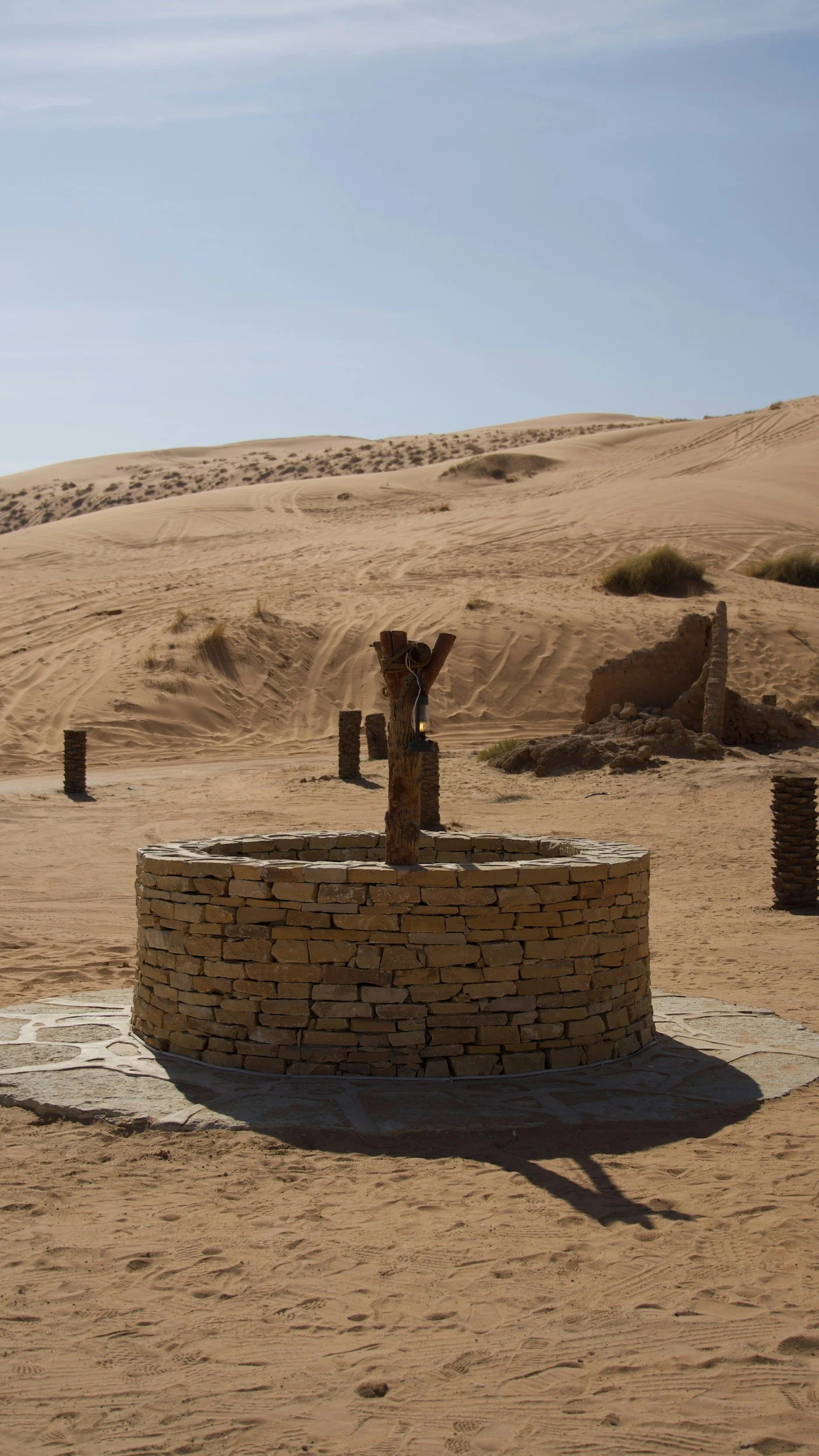
There is an interesting question in Choshen Mishpat, straight from the end of Parshat Vayeira - the story of the well in Be'er Sheva:
And Avraham rebuked Avimelech about the well of water that Avimelech's servants had stolen. And Avimelech said, I don't know who did this thing, and also you didn't tell me, and also I didn't hear about it until today. And Avraham took sheep and cattle and gave them to Avimelech, and the two of them made a covenant. And Avraham set seven ewe-lambs apart by themselves. And Avimelech said to Avraham, What are these seven ewe-lambs that you set apart? And he said, For you shall take these seven ewe-lambs from my hand, so that it will be a testimony for me that I dug this well.
Question for the Shabbat table: Avraham claims that Avimelech's servants stole his well. Avimelech claims he didn't know. Avraham gives him sheep and cattle, plus seven lambs separately - and says: "It will be a testimony for me that I dug this well."
Why does Avraham need to give a gift to prove that he dug a well? The digging itself is the proof. And why does he make a compromise and a covenant, instead of suing for theft in court?
Stealing a well - what was actually stolen?*
A well is not an object you can pick up and walk away with. It is land. In Choshen Mishpat, stealing land is different from stealing movable objects: Land cannot technically be stolen, it remains in the ownership of its owner, and the thief must leave it. In other words, Avimelech's servants didn't "take" the well in the normal legal sense - they took over its use, blocked Avraham's access, and seized control by force.
And this is already an interesting question: If someone takes over your well, but the well stays in its place, is that theft that requires returning it, or just preventing use that requires compensation?
Avimelech's claim - "I didn't know"
Avimelech doesn't deny that the well belongs to Avraham, he says he didn't know about the theft. In Choshen Mishpat, this is a known claim: A master who doesn't know that his servants stole - is he responsible? On one hand, his servants acted in his name and on his territory. On the other hand, if he truly didn't know and didn't agree, it's hard to make him liable as a thief.
Therefore Avraham does not sue him as a thief, he rebukes him - he informs him, so that from now on he will be responsible. This is a subtle and important difference: Before being informed, Avimelech can claim lack of knowledge. After being informed, his silence will be considered agreement.
The seven lambs as testimony - how does a gift become evidence?
Here is the most interesting point. Rashi explains: The lambs are not payment, they are testimony. Avraham gives Avimelech a gift, and Avimelech accepts it - and by the very act of accepting, he admits that the well belongs to Avraham.
In Choshen Mishpat this is called _hoda'at ba'al din_ - admission by a litigant. A person who admits, even indirectly - by accepting a gift that was given on a certain condition - admits to the fact. The acceptance is the admission. Therefore Avraham doesn't need outside witnesses: Avimelech himself, by accepting the lambs, becomes a witness in his favor.
And that is also why he gives seven lambs separately, by themselves, and not as part of the general sheep and cattle of the covenant. The sheep and cattle are for the general covenant. The seven lambs are a separate thing, with one legal purpose: testimony about the well.
Why compromise and not strict law?*
Avraham could have insisted on strict law: The well is mine, get out. Instead he makes a covenant. In Choshen Mishpat, a compromise is sometimes better than strict law - not because the law is not just, but because strict law leaves enmity, and a covenant leaves good neighborliness.
Avraham lives in Avimelech's land, he needs water, and he needs peace. He prefers admission and a covenant over winning in court that would leave Avimelech as an enemy. This is a question that comes up in every neighbor dispute until today: Do you want to be right, or do you want to continue living next to him?
Discussion for Shabbat Meal
A neighbor took over part of your yard, or a well, or an access path, and claims he didn't know it was yours. You inform him, and he stays silent and continues to use it.
Is his silence after being informed considered an admission? And is it better to sue him all the way, or to make a covenant with him like Avraham - to agree on a border, in exchange for an admission?
Sources: Bereshit 21:25-30; Rashi there; Choshen Mishpat Siman 361 on stealing land, and Siman 79-75 on admission by a litigant being like a hundred witnesses.